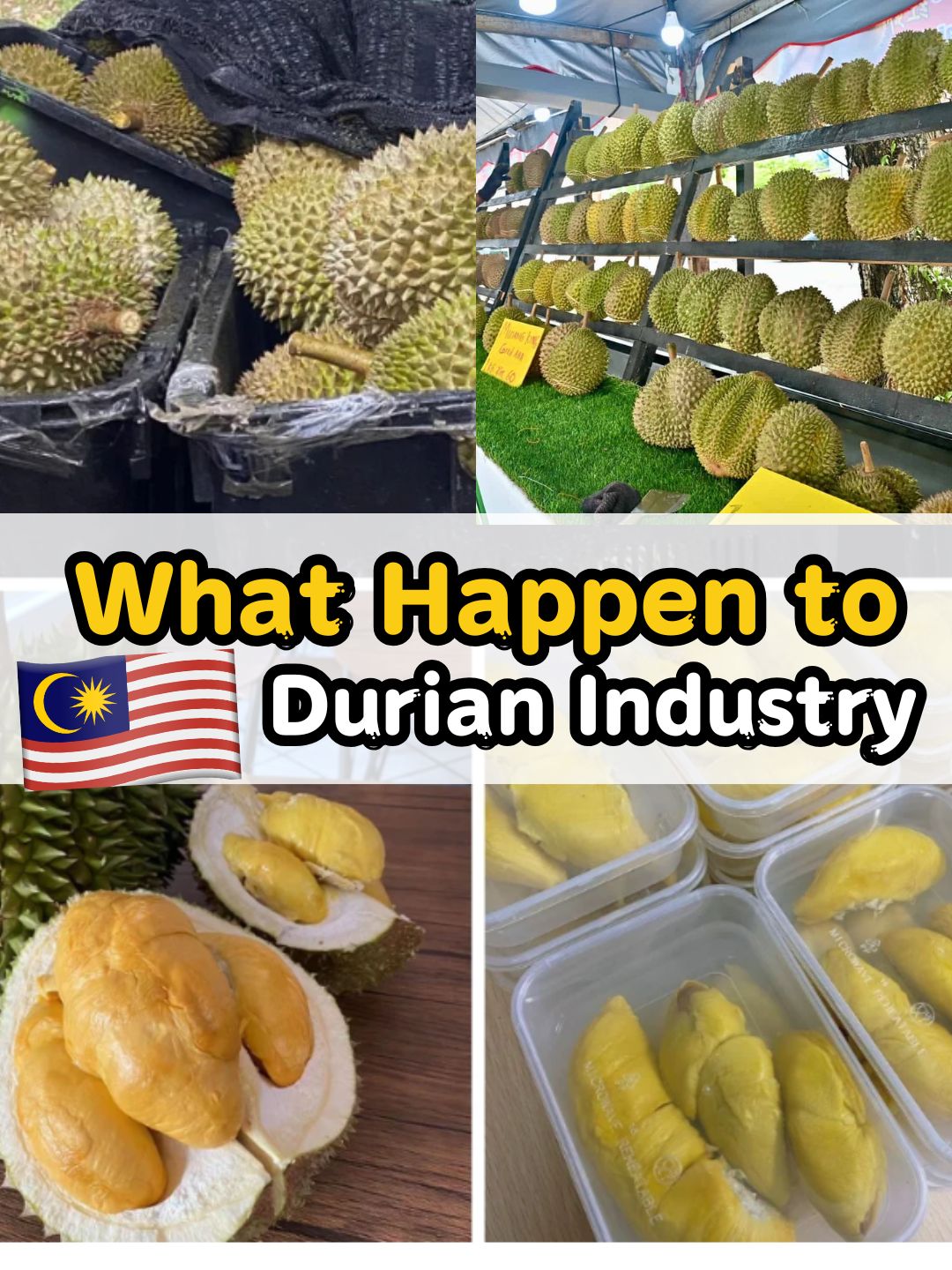
😱 What Happened to Malaysia's Durian Industry? The 2026 "Durian Tsunami"
In 2026, Malaysia's durian market experienced an unprecedented price collapse. While many blame oversupply, the real issue goes beyond production. Years of premature harvesting, artificial ripening, and inconsistent fruit quality have gradually damaged consumer confidence. [1][5]
📉 The Market Reality
Kampung durians: Farm-gate prices dropped to around RM2.70/kg, with some roadside stalls selling fruit for as little as RM0.50 each.
Mid-range varieties (Red Prawn, D101): Cleared at only a few ringgit per fruit due to weak demand.
Musang King: Once selling at RM90–100/kg, prices plunged to RM9–20/kg, with many sold by the fruit instead of by weight. [5]
🌳 Why Prices Crashed
Massive Oversupply
High profits five years ago triggered large-scale planting. In 2026, many orchards reached full production simultaneously, creating a supply glut. [1][4]Export Challenges
Slower overseas demand and stricter import requirements, especially in China, reduced exports, forcing more durians into the domestic market. [3][6]Damaged Market Reputation
For years, some growers harvested durians too early and relied on artificial ripening to reach the market first. These fruits often lacked aroma, creaminess, and flavor, causing consumers and overseas buyers to lose confidence.Poor-Quality Fruit Dragged Down the Entire Market
Inferior, immature, and diseased fruits flooded the market. As buyers became disappointed, demand declined across all grades—even premium, naturally tree-ripened durians.
💬 Conclusion
Short-term profits from early harvesting may benefit a few, but they come at the cost of the industry's long-term reputation. The future of Malaysia's durian industry depends on maintaining quality, allowing fruit to ripen naturally on the tree, and rebuilding consumer trust.